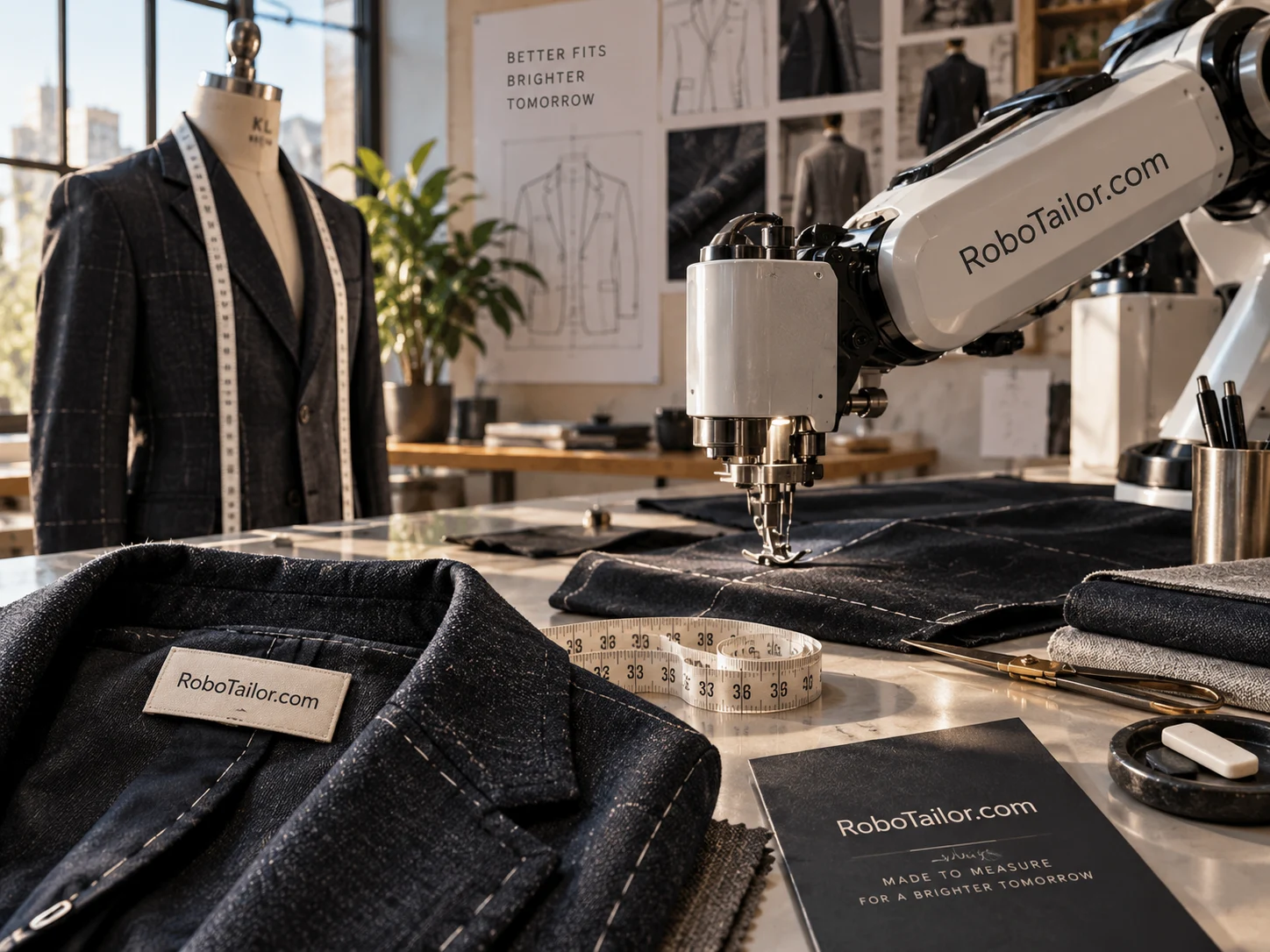
A made-to-measure label needs a reason for someone to order a second garment. Novel machinery might earn the first look. A comfortable shirt, a useful adjustment and a dependable reorder experience are better reasons to come back. RoboTailor.com could be the public name for a clothing business built around that second order.
This is an illustrative concept for a future owner. The first customer could be someone who repeatedly finds a good shirt with the wrong sleeve length or an acceptable trouser waist with an uncomfortable seat. Start with a problem narrow enough to describe in a fitting appointment. “Clothes made for everybody” gives a young business too many promises to keep.
Make the first collection deliberately small
Choose one garment family and a restrained set of materials. A work shirt in two fabrics is a more useful starting brief than a complete wardrobe. Define the available collar, cuff, pocket and length choices before presenting personalization as open-ended. Each extra option introduces another combination that needs a sample, instructions and a way to inspect the finished result.
The offer should describe what changes between orders. Perhaps the business adjusts sleeve length and body length from a tested base pattern. Perhaps it develops an individual pattern after an appointment. Those are different services. Give the customer enough information to understand which one is being purchased, including the fitting support and adjustment process.
An initial collection can also reveal which preferences deserve permanent options. If several customers request the same pocket position, record the request and test it. A running list of exceptions is useful evidence for the next collection. It is less useful when every exception silently becomes a permanent promise on the product page.
Give measurement a consistent meaning
A fitting record should separate body dimensions from the dimensions of the garment. It should also record preferences: a relaxed cuff, extra room when seated, or a longer hem for tucking. Those details explain why two customers with similar measurements may choose different finished garments.
ISO 8559-1 describes body measurements used in clothing. It offers a reference vocabulary, not evidence that a particular brand can deliver a particular fit. A proposed label would still need its own documented measurement practice, tested patterns and a clear way to resolve inconsistent information.
For a first appointment, keep the customer’s task manageable. Explain what to wear, which measurements will be taken and how an existing favorite garment can help the discussion. Avoid making the customer interpret a complicated technical diagram alone. A confusing first measurement can create work that follows the order through cutting, sewing and support.
Put the machine behind a specific operation
The proposed business could automate selected sewing or handling steps while keeping fitting and final inspection with trained people. Public language should identify the actual operation. “Robot-assisted stitching on this seam” is more useful than a sweeping claim that the entire garment is made automatically.
Before choosing equipment, prepare representative samples and difficult variations. Ask an equipment supplier to demonstrate loading, alignment, sewing, unloading and recovery after a fault. The relevant question is whether the complete operation works with the proposed materials and patterns. A short clip of a needle moving across an already positioned sample leaves much of that question unanswered.
Plan a manual route for work that falls outside the supported range. Record why a piece moved to that route. The answer might point to a pattern issue, material variability or an operation better left to skilled hands. That information should shape future product choices rather than disappear into a general rework total.
An example first order
Consider a customer ordering a cotton shirt for desk work. The customer likes the collar and shoulder shape of the sample but wants more seated comfort and a shorter sleeve. A fitter records the requested changes against a named pattern revision. The order then carries the fabric selection, finished dimensions and inspection points together.
At collection, the customer tries the shirt while sitting and reaching forward. If an adjustment is needed, the revised record explains both the change and its reason. On the next order, staff can ask whether the same preferences still apply. The repeat purchase becomes easier because the business preserved useful context, not because an old measurement was treated as permanent truth.
This example also establishes the service boundary. A change of fabric may call for another review. A different garment family may require fresh measurements. Explain those moments before offering a one-click reorder for every product in the catalog.
Find customers where fitting already matters
One plausible distribution route is a small appointment program with a retailer that already serves the intended customer. The retailer supplies a setting where fabric and fit can be discussed. The new label supplies a defined collection, samples and a documented follow-up process. The relationship needs a clear owner for customer questions and adjustments.
A product page should support that appointment rather than overwhelm it. Show the actual garment, available materials, adjustment choices and collection process. Explain which parts of the service can happen remotely. Photography can make the product desirable, but the order instructions have to make the purchase understandable.
What the name would carry
RoboTailor.com suits this concept because it makes the relationship between tailoring and automation easy to recognize. The clothes still need a distinct point of view: workwear, everyday shirts, occasion dressing or another chosen use. That point of view belongs in the collection and its presentation.
A prospective owner should bring a first garment, intended customer and fitting model to the acquisition discussion. Describe which operations would be automated and which team would support customers. Those details turn a broad interest in the domain into a concrete business proposal, whether the next conversation concerns a purchase or a partnership.