A product name starts a conversation before the specification sheet appears. In apparel robotics, that conversation can move quickly from “this uses automation” to “this will make any garment fit.” A naming system should help a buyer understand the category while leaving capability claims to statements the business can support.
The practical task is to separate three levels: the house name, the product being purchased and the individual functions inside it. Each level has a different job. Using the same ambitious phrase for all three makes the offer harder to explain and creates avoidable expectations for sales and support teams.
Give the house name a broad but useful role
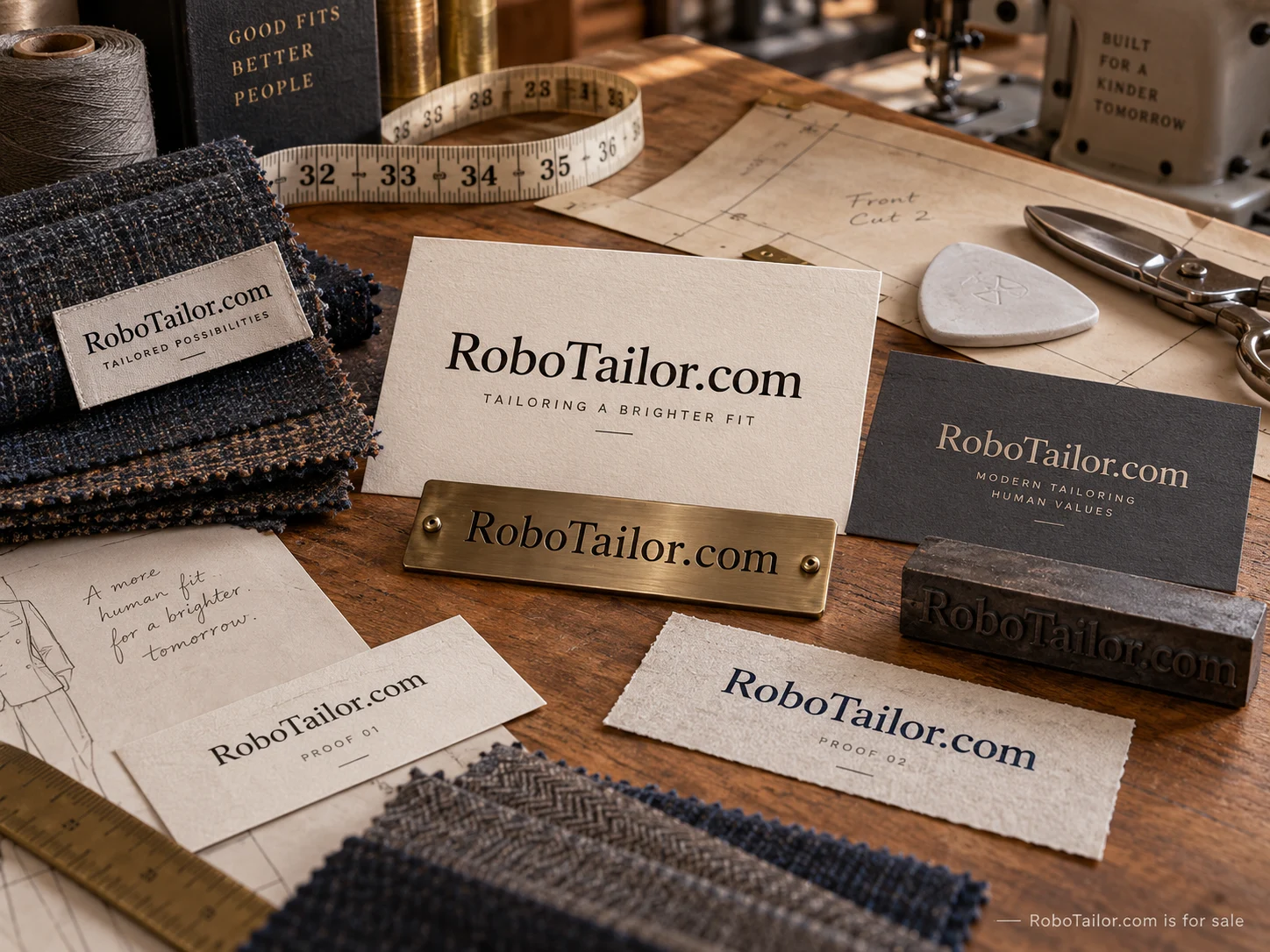
The house name identifies the business or product family. RoboTailor.com, for example, introduces a relationship between robotics and tailoring. It does not specify a supported material, an available sewing operation or the number of fittings a garment might require. Those details belong in the offer beneath the name.
Test the name by asking a potential customer what kind of business they expect to find. Listen for the nouns and verbs in the answer. A response about garment technology may be useful for a B2B platform. A response about ordering a custom suit may reveal a mismatch if the actual product is software for production scheduling.
The purpose of this exercise is to discover expectations, not prove that one name is universally understood. Record the audience and the explanation they saw. A clothing shopper and an equipment engineer may interpret the same phrase differently because they arrive with different jobs to do.
Name the product at the purchase level
A product name should help the buyer distinguish one offer from another. Under a broad house name, a descriptive label such as “Seam Workstation” or “Fitting Records” can establish the product’s role. These are illustrative naming patterns, not proposed cleared marks or existing RoboTailor products.
Include a short descriptor where the name alone cannot explain the offer. “Software for fitting records and garment tickets” is more informative than asking a poetic name to carry the entire specification. A buyer should know whether the conversation concerns equipment, a subscription, an appointment or finished clothing before reaching the inquiry form.
Keep editions and versions understandable. If two products differ in supported operations, name that difference clearly. A series of prestige adjectives can imply a capability hierarchy without saying what actually changes. Buyers comparing proposals need the differences in scope, integration and support, not merely the impression that one edition is more advanced.
Use feature labels for observable actions
A feature label should describe what the user can do or what the system produces. “Record fitting changes” identifies an action. “Perfect Fit Intelligence” invites several unanswered questions: perfect by whose judgment, evaluated how, and covering which garments? The second phrase creates work for everyone who later has to explain it.
Review verbs as carefully as adjectives. “Measures,” “estimates,” “suggests” and “controls” describe different relationships between a tool and a result. A system that suggests a pattern adjustment should not be labeled as if it directly verifies the finished garment’s fit. Match the verb to the actual output and the person responsible for using it.
Use the same feature name in the interface, help material and sales page. If the public page calls something automatic while the operator instructions describe a manual approval step, the naming system is concealing a workflow difference. Fix the wording or the product definition before asking support staff to bridge the gap.
Write an expectation ledger
For each candidate name or prominent phrase, record what a reasonable buyer might infer. Then attach the evidence or explanation that supports the intended interpretation. The ledger can be simple: phrase, expected meaning, actual capability, supporting material and proposed revision.
Consider “automated fitting.” A buyer might infer that the system independently determines comfort and produces a final garment. The actual tool may only record dimensions for a fitter. A revised phrase such as “measurement-assisted fitting appointment” could better describe the service, provided that is what the appointment actually includes.
This review should include imagery. A machine photograph next to a broad headline can create an impression beyond the literal sentence. Place the supported operation or product descriptor close enough that the buyer does not need to search for the missing context. Good naming and good presentation have to work together.
A worked naming architecture
Imagine a company preparing a sewing cell for one bounded garment operation. The house name appears on the site and machine housing. The product name identifies the cell. A nearby descriptor names the supported operation, while the specification explains materials, preparation and inspection requirements.
Inside the interface, features are called “Load job,” “Review setup” and “Record inspection.” A stopped run displays the actual state and the next approved action. The product does not use a grander vocabulary in the interface than in the operator guidance. A new user can connect the sales promise to the work on the screen.
If the company later adds fitting-record software, that product receives its own descriptor. The relationship to the house remains visible, but the buyer can distinguish the two offers. This architecture leaves room to grow without pretending that the original sewing cell performed every future function from the start.
Test the language without leading the reader
Show a small number of representative buyers the proposed introduction. Ask what they think is being sold, who would use it and what they would expect it to do. Avoid first explaining the intended answer. The difference between the initial interpretation and the later explanation is the information the test is meant to reveal.
Ask what they would need to know before taking the next step. A technical buyer may ask about materials and integration. A shopper may ask about appointments and adjustments. Those questions help decide which descriptor belongs immediately under the name and which details belong deeper in the page.
Record confusion rather than voting only on preference. A name can be well liked and still misunderstood. Conversely, a plain descriptor may be less exciting but more useful at the moment of purchase. Evaluate the combination of name, descriptor and offer rather than making the name carry the entire burden alone.
Keep technical and legal reviews separate
A language test is not trademark clearance. Domain ownership does not establish rights to use a name across every market or product class. A prospective business should obtain the appropriate professional review before adopting a name. That work is separate from testing whether customers understand the offer.
Technical evidence also has its own role. Research on robotic fabric handling and sewing can help frame a technical discussion, but it does not validate a product’s marketing claim. A commercial capability statement should point to evidence for the actual system and conditions being described.
To finish an audit, choose one product page and mark the house name, product name and feature names in different colors. Write the expected meaning beside each. Revise any phrase that promises more than the adjacent explanation can support. The result should make the offer easier to understand in a sales conversation, a fitting room and a support exchange.